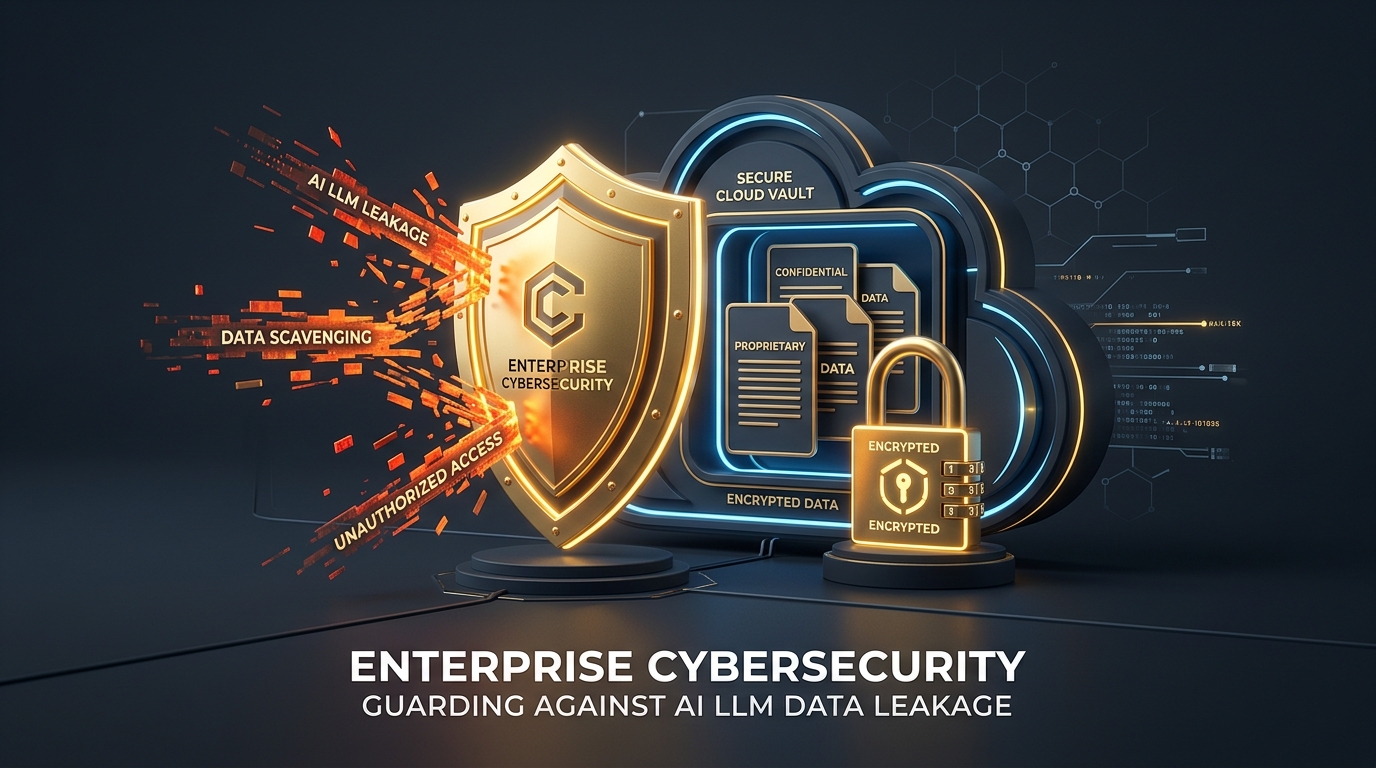
The foremost operational concern when adopting AI is the risk of employees pasting non-disclosure agreements, customer records, or financial balance sheets into public chat interfaces.If sensitive information enters public training corpora, proprietary business advantages can be irreversibly compromised.Customer prompts and outputs are zero-data-retention for training.
Robust encryption protects payloads both in-transit and at-rest.
Automated compliance windows purge cached tokens after verification. Zero bytes leave your enterprise virtual private cloud.
Systems function autonomously during external connectivity disruptions.
Complete regulatory adherence is maintained with audit-ready sovereignty. Data protection should never delay AI adoption; it simply defines the baseline architecture for sovereign engineering.
Protecting Proprietary Enterprise Data from AI Information Leaks
Best practices for utilizing commercial LLM APIs and local open-weight models without exposing client records or confidential codebases.
Büsra Baso··4 min read
Bimbelai empowers individuals and businesses with practical, sovereign AI systems.
Explore platform →